New Memory

Sacred heart

Past Trauma, New Memory and the Now

We are shaped moulded by yesterdays, past generations of our families hand down formed rituals as facts to live by. Generation after generation, commemmoration after commemmoration. Rigid to custom, tradition and strict rule.  Ireland and the Irish State draws from a similar past for its authenticity. As a people we seek our identity in a past that is overwhelmingly tragic.  We are baptised by and large into a faith based on suffering, sacrifice and death with a promise of everlasting afterlife. Our very bones carry the memory of a traumatic past, not of our making, and we are captured and held hostage by it and, as we face into this commemmorative decade, we must ask ourselves – who we truly are and what we would like to become in the future? What new memory can we create now that will change that perception of ourselves as victims and survivors which keeps us from true ownership of ourselves.

In Ireland, change comes about with great reluctance, resentment and vindictive consequences.  We have had the case of Savita, the X case, the child abuse issue, the nursing homes, the banking issue, the planning issue, the Northern troubles, not to mention the Limerick City of Culture and the issues of Temple Bar Cultural Trust – yet, no new way is forged.  We remain childlike, hapless.  We jump up and down and shout outside the Dáil, re-elect the same people and on it goes. Yet no lessons are learned.  No new way forged.  We all complain about RTE, The Abbey Theatre, yet we still watch and we still go.  Disappointment seems to be our sedative.

Appeased by our own complaining, we saunter fatalistically along with our false image intact.  Uncomfortable? Of course.  But alcohol can take care of that. On we go, until somebody mentions any of these institutions or individuals and then the backlash begins.  You are accused of having ‘sour grapes’.  You’re accused of personalizing.  The keepers of ‘no change’ make you out as a loose cannon.  Negative, destructive, dangerous.  A threat to their cosy number.  And we all sing the chorus line ‘Sure it’s not that bad, ah sure it could be worse’. “lets move on’. Or in the immortal words of Pat Cox “I’m determined to hit the reset button’.  Not address the problem, not learn from the problem but simply “reset” so the problem seems never to have happened – that’s the Irish way.

So what do you do with themes like the role of memory in making theatre.  The challenge of commemorating historical events? Well, you simply make something new.  Something that will grow and be free.  Big and open.  The making of new memory.  New ackowledgement of the immediate now.  Your now.  Our now.  How you feel rather than how you think.

The challenge is not so much about the challenge of commemmorating historical events like 1914, 1918, 1916, 1922 , the Lockout, the Battle of Clontarf.  It’s about how you set yourself free from them. And how you free them from us. Create a new legacy.

We have to remove ourselves by all means possible from our own institutionalisation.  Otherwise the continued indoctrination of our collective memory by the State and other agents through the spectacle of event commemmoration will succeed in reducing us to spectators, lookers on and not the true owners of our own history.

Theatre events are made from interrogated memory, from memory which is investigated and creatively interpreted.  The burial of active memory and conscious recall is a form of conditioned self-censorship.  In a way, we have to save memory from being consigned to memory. We must resist adopting the ruling class memory of a magic nostalgic masquerade which separates us from truth.  Their version of our memory is akin to a closed down thing. Coma induced.  Our conscious memory struggles to be switched on.  So tread softly cause you tread on my memory.  Memory cannot be told ‘thus far and no further’.  So let new memory arise. Without interference and without baggage.  Memory is not a thing of the past.

Facebook, Google, Twitter, Linkedin and their like, they are the enemies of live human memory.  The mobile phone and other machines have the potential to erode and take over our relationship with our memory and private self.  Synthetic history has begun – out there on the world wide web.  In our hands, on our persons, in our houses, in our environment – our intimate relationship with our private selves and self discovery, that mystery, that journey is being surrendered to triumphant capitalism and consumerism.

“No Escape” at the Peacock Stage some time ago, and also part of this symposium, is, in my view, an exercise. An excuse for the lack of  artists’ involvment in exposing State terror and church inhumanity as well as society’s indifference to what went on in State institutions in this country.  The theatre makers in this case take a whitewashed State document – the Ryan Report- take witness statements and do a kind of pageant enactment which turns real events into theatre commodity.  Rendering the struggle for truth and justice into a night out in the theatre for the elite cultural class.  It is easy to move an audience to crying and feeling sorry for what happened to the poor kids in the institutions in this society.  It is much more courageous though to enrage a public in order to change this society.  In this instance the State Theatre, used a State document in furtherance of its own self-service and appeasement.  True story and real events are stolen from the owners.  The authentic voice is silenced and we are estranged, again. Orphaned again. This time from one of the few things we can truly call our own   – the memory and experience of what happened to us.  The theatre in this instance kills the possiblity of inclusion for an entire generation and a deeply oppressed class.  The struggle is betrayed and all of the uncomfortability of Irish society is laundered out, made safe.

New memory can only arrive with true authenticity.  An uncontaminated platform.  It won’t hold or lend  itself to the notions of those with no real true cultural credibility who float about, aloof.  New memory will seek the risk taker. The brave.  The daring.  Not those who lick up to the Arts Council or other funders who wish to continue to promote the lie of the status quo. The fake of the State.

The Risen People, the show, set out to make new an old play, an old story about a past real event.  The primary purpose of staging the work at the Abbey Theatre, the State Theatre is the acknowledgment of the anniversary of the 1913 lock-out 100 years ago.  This meaning gets lost at the Abbey Theatre because of the failure to acknowledge what they have created, which is the ‘theatre of commemmoration’ and not the theatre of the Risen People.  What now needs to happen here is a process of disentanglement from versions of the work to a celebration of the new possibility for a new public that will carry a lasting memory of commemmorative theatre that has meaning and healthy acknowledgement of real events in our city.

The future generations have a right  to be free from a contaminated institutionalised collective memory that enslaves them and closes down the possibility of past as a celebration.  Our task is to rescue and recover historical memory and events from the brutalised past and transform them into celebratory events.  Free of the brutalised memory. Now is the time for a new hour, a new day, a new memory for a new time.

Release Margaretta D’Arcy Now!

To everyone out there – please petition the Irish authorities and the Minister for Arts, Jimmy Deenihan (jimmy.deenihan@oir.ie) for the immediate release of artist, political activist and Aosdana member Margaretta D’Arcy.

Margaretta is now incarcerated in Limerick prison on the trivial matter of refusing to sign a peace bond regarding her protest at Shannon Airport.  Margaretta is a committed person but is of very frail health.  The courts and the administration of justice’s first role is mercy and compassion.

Margaretta D’Arcy is a threat to no-one and certainly no threat to public order.  She is a person of enormous integrity and dignity and is one of the finest global citizens one could meet carrying an Irish passport.

A moment behind bars is a moment too long for this courageous individual to be out of our company.

Margaretta was simply exercising her right to protest without hindrance. All right minded citizens should immediately ring their TDs, Cllrs and Public Representatives and insist that Margaretta D’Arcy be release immediately.  She is 79 years of age and is a National Treasure. She is a life long committed activist.  Please support this worthy woman and bring her home.

Cultural Gangland – Limerick

The Limerick City Manager, the Chair of Limerick City council, and all of the Limerick City Councilors have to be held accountable for this amateurish situation.  I sincerely hope that the councilors are presenting emergency motions and are meeting around the clock to resolve this issue.  They are the ones who are ultimately responsible.

Limerick shouldn’t be singled out for ridicule as a result of the failures of those whose job it is to make sure things are done correctly, above board and within best practice and principal.  All the guidelines are there.  All the protocols are there and all the corporate governance legislation and law is there.  It would seem they departed or had indeed wreckless disregard for these procedures in their appointment of certain individuals without going through the proper recruitment procedures.

It is simply mind-boggling that a person with no experience in the Arts was given a plum job by the Limerick City Manager and endorsed by the Chairman of the City of Culture committee.  Their contempt is shameless.  Who do these people think they are? They ask for our trust, we give it to them and they behave appallingly and cause enormous damage to the great people of Limerick and their fantastic city. These kinds of people are not unique to Limerick.  The same controversies can be found in the more recent Derry/LondonDerry City of Culture and indeed more closer to home our own scandalous and corrupted Temple Bar Cultural Trust.  A company, that is now to be wound down as a result of its bad practices.  The loss is to the City of Dublin and to the Temple Bar area itself and to all artists everywhere.  After all, this was meant to be the outstanding ‘Cultural Quarter’ and it would appear it was just one big gravy train.  Certain grubby, greedy arts managers and administrators hell bent on furthering their own egomaniacal careers and stuffing their own pockets at the expense of the public and indeed the many thousands of struggling artists.

We need to expose the culture of these wrongs and confront these kinds of practices.  The courageous individuals who took the decision to resign as a way of challenging these similar kinds of practices has to be commended.  Maybe now we are going places.  We’re confronting our politicians, we’re confronting the clergy, we’re confronting the Banks, now we’re confronting ‘Cultural Gangland’ and its elites.

I wish Limerick city and its people the very best and I have no doubt that the courage of the Limerick artistic community will get to the bottom of this and bring a sense of transparency, clarity, fairness and accountability – plus consequences for those found wanting.  Controversy is not a bad way to start a cultural event.  You have our attention.  So far so good!

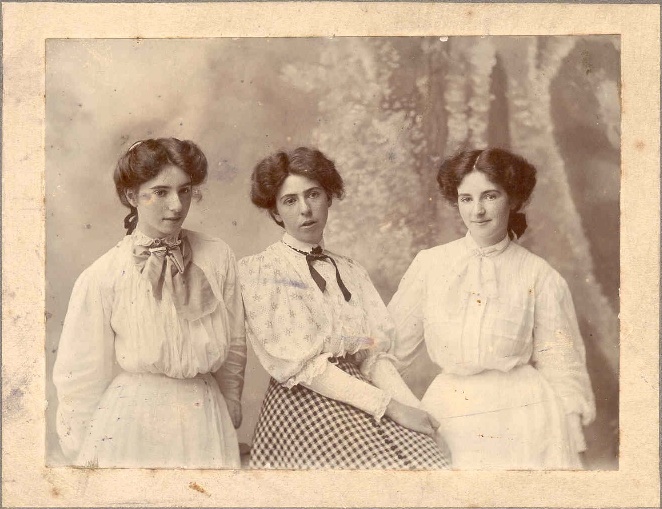
Madge, Kathleen and Laura Daly, Limerick City

Madge, Kathleen and Laura Daly, Limerick City

http://www.limerickleader.ie/what-s-on/arts-entertainment/resignation-of-karl-wallace-from-limerick-city-of-culture-followed-performance-review-1-5782263

On this day in 1913…

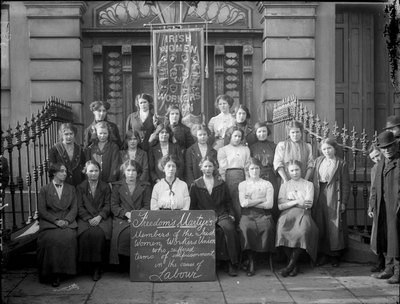
On this day in 1913 a young 16yr old woman, Alice Brady, was shot on the afternoon of December 18, 1913, during a protest on Mark Street during the Dublin Lockout, and died shortly  afterwards. A convoy of eight coal carts had arrived on Mark Street during the strike and locals protested causing a disturbance which resulted in two shots being fired by one of the strike-breakers named Patrick Traynor, described as a free labourer, with an address in West Essex Street, near Wood Quay.


Alice was hit in the left hand and was brought by a young local girl into her house on 6 Mark Street where a dressing was placed on her wound.  From there she was brought to St Patrick Dun’s Hospital and later released, but died a fortnight later on Thursday, January 1st, from lockjaw or tetanus, a not unusual outcome of gunshot wounds at the time, which made the discharging of any firearm a lethal matter.

Traynor’s trial split the city along social class lines and there was outrage when he was eventually found not guilty on a lesser charge by  a jury of property owners.

Though aged only 16, Alice Brady was already working in a factory and was a member of the Women Workers’ Union. She lived with her parents in 21a Luke Street, off Townsend Street, and just around the corner from where she was shot in Mark Street.

At her funeral on January 5th, 1914, thousands gathered in Pearse St (then Great Brunswick St) to march in a “sombre funeral procession” to Glasnevin Cemetery. It was reported that 500 members of the Irishwomen Worker’s Union, to which Alice belonged, were in the cortege, which was headed by two bands.

Among those present were James Larkin, Delia Larkin, James Connolly and Countess Markievicz. In his graveside oration, James Larkin praised the courage of Alice Brady and said nothing could surpass the loyalty of the women workers. James Connolly said Alice was “as true a martyr for freedom as any who ever died in Ireland”As it stands, she is remembered in Dublin only in a plaque in Liberty Hall and on her gravestone in Glasnevin, which reads: “Erected by Federated workers union of Ireland and Irish Transport and General Workers Union in memory of Alice Brady, factory worker age 16, who died January 1st 1914 as a result of civil strife associated with the 1913 lockout.” (Research, John Moran)

I will be presenting a motion to City Council for the erection of a significant plaque in the city to commemorate this young womans short life, and ultimate sacrifice.

womenworkersunion

The Politics of Philomena

The most startling thing to emerge from the premiere last night of Philomena was the lack of any questioning around accountability for the theft of a child, in this instance Anthony Lee from his mother Philomena, who was incarcerated in Sean Ross Abbey for 4 yrs in the 1950s.  The whole issue of criminality was avoided throughout the entire film and there was an uncomfortability in the Q & A emanating mostly from Steve Coogan, who was making every effort to be inoffensive in his efforts to appease Catholic sensibilities.  It would seem to me that Mr Coogan, producer, co-writer and star of the movie, didn’t really understand the politics of the issue of the banished babies and the criminal trafficking of children for profit out of Ireland and other countries that was perpetrated by the Catholic Church and religious congregations.

What happened here was that like many other children, Anthony Lee was taken from his mother without informed consent and for over fifty odd years the Irish Catholic Church, Religious congregation and indeed the State itself, concealed the whereabouts of mother and son from each other.  Yet, what we watched at the IFI premiere last night completely avoided the global issue of the “banished babies” of Ireland.  Nobody so far has been held to account for this practice; there have been no Garda investigations or Interpol investigations; nobody from the national Airlines (Aer Lingus) or Pan Am airlines that actually trafficked the children out of Ireland have been confronted. Indeed, this whole issue has been slightly saccarined and turned into a warm human interest story rather than a story of organized, joint-venture criminality.

The whole reality of this film is sentimentalized through a naive Catholic spiritualism.  A lot of it is cliched and it never really deals with the horrendous tragedy and evil of what was perpetrated on thousands of mothers and their abducted children to this day.

The story of Philomena is based on true events.  True events that happened to generations of people and, while this abduction of children was going on in so-called Mother and Baby homes, there was also the rape torture and inhumane treatment of tens of thousands in what are now known as Ireland’s residential institutions.  The Mother and Baby homes like Sean Ross Abbey, Bessborough, Castle Pollard etc. formed part of a network of compounds where individual citizens were incarcerated and exploited till they died, made good their escape or somehow found themselves miraculously released.

The trauma of what took place in these institutions still permeates this society through the suffering of the individuals who were incarcerated there.  That suffering continues as many mothers seeking to find their children and many children seeking to find their parents are still not being given access to their personal records, to their authenticity, to their origins. There is an indifference, a disregard and a continuous punishment in the way Religious Congregations and indeed the State continue to behave around this issue, which borders on contempt.  There was an opportunity in Philomena to address these issues but the writers of the script chose not to do so.

This undermines the credibility of the movie and does a great disservice to this single story and to the big story because after all this tale is one of thousands of similar tales that are now emerging as part of Ireland’s social and criminal history.

Despite the warmth of the film and the good reception that it received at all the film festivals so far (Toronto, London, Venice) somewhere, the real issues that are at the centre of this story, the hard cruel facts, that unheard story, that brutality, uncomfortable as it is, has to be heard, has to be owned has to be accounted for.  It is not just the story of Philomena and Anthony Lee, it is the story of a society and as such the secret history of Ireland and the Irish State and religious institutions cannot be so simply packaged in a feel-good, heartfelt portrayal of real events that have not been dealt with so far.

We had to drag the apology from the Taoiseach in relation to the Magdalene Laundries and large parts of the truth have still been avoided in the massive whitewash of the Ryan and McAleese Report. The complete indifference and lack of consequences for all those that were involved in the criminality and abuses that were described in the Ferns, Murphy, Cloyne reports etc. There is a great danger here of assuming that we have dealt with these issues and that there is some measure of closure on them, but still the Church and State continue to deny wrong going and the myth that everybody was just trying their best in very difficult times continues to be perpetrated.

Judy Dench gives a fantastic performance as does Steve Coogan, the whole cast excelled themselves and it is a good movie, but that’s all it is –  a good movie, an entertainment, a night out in the cinema.  It doesn’t ask anything of us, it merely brings us along in a sad-warm way.  It’s a road movie that is very satisfying.  The danger here is, is that it smothers the ongoing issue of what’s happening in Irish society and elsewhere and can give further credence to the school of thought that wishes to put this whole issue behind us and let us get on with it.

Adoption Rights Alliance and other such organizations and individuals are desperately seeking information and the rights today for open access to all of their paperwork, their birth certificates, medical records etc.  They are seeking their truth that has been held from them all their lives as it was for Philomena Lee and her son Anthony Lee.

The film will certainly throw light on all of the issues that I’ve mentioned above and it will find its place in the cultural representation of Ireland’s social history, albeit from a British perspective and sensibility. This is a British movie, but what’s not uniquely British about it and what came across last night in the Q & A and in the movie itself, was its unwillingness to ‘go there’.  While I welcome the film, I note its lack of responsibility to the overall story, its insistence on the sensibility of the human story at the cost of the politics and the truth of the issue.   When, in actual fact what you have here is organized criminality on such a scale that it should really warrant a massive European, if not global investigation or tribunal, not dissimilar to that which is conducted by the United Nations into crimes against humanity because that is what this is.

With due respects to all of those who were involved and with deep respect to Anthony Lee who died searching for his mother – who died being told a lie by the very people who thieved him from his mother and continued that thievery by robbing him of his mother’s whereabouts – this story is not just theirs; it is all our stories. And unless you deal with this story in the way you would deal with any fascist of dictatorial regime, like the institutional Catholic Church, like the institutionalized Irish State,   all you are doing here is facilitating and enabling the closing down of the story, the othering of the story and the perpetration of further suffering.

There were comparisons made last night with the Magdalene Laundries so on so forth, but you can’t compare ongoing trauma and truth with films that are by-and-large commercial enterprises to the story of institutional tragedy.  The story of Philomena Lee is essentially a political one involving a sovereign state and its inactions to protect its citizens and a global church that professes Christianity love, truth and respect, but is engaged, in this instance, in joint venture acts of appalling inhumanity and cruelty.  It is up to us, the cinemagoers to inform ourselves to the highest degree on all of the issues that are missing from this film.  That said I would urge you to see the film because some truth in all its horrors still manages to reach out and touch us. Perhaps because of what we already know in relation to the culture that still exists in our country.

It will take some time for society to extract the truth on this whole issue.  Memorials at the Garden of Remembrance, Magdalene Sisters films, and films like Philomena can never be a substitute for the truth the whole truth, and nothing but the truth in fact sometimes such films can damage truth and authenticity as they can perpetrate the lie that it was ‘all done in good faith’. This film will now be promoted by Harvey Weinstein and may possibly even win an Oscar, however there is always the possibility that it could damage the ongoing advocacy for truth and accountability.


With all that in mind – please go.  And when you come out of the cinema, get involved, demand answers.  Seek accountability.  Don’t let the Church or the State off the hook. What happened here was on an enormous scale and that enormity has not been reduced, but has been added to by the continuous refusal of the congregations of nuns at the centre of the Mother and Baby homes who were willfully engaged with the theft, trafficking and sale of children to be held accountable, to hand over the many documents and files that they have in their possession.  These documents need to be given to their rightful owners without any hindrance whatsoever. Everybody has the right to their own information. The lie that is about that these documents were lost through fire damage or floods etc. needs to stop.  People have memory. The congregations duplicated many of its documents. Every child had a passport forged.  People know.  Including Aer lingus, Pan Am and emigration.

In essence the film is about secrecy which forms an unbroken web. That secrecy is never challenged.  And even the cinema goer is asked to accept that secrecy.  It is this very secrecy that gives rise to gross abuse in society, from the institutions of the state, the institutions of the church and the very institution of the family and here right before us in the IFI that secrecy is well maintained by the cultural industry and the film community.  This is far too serious an issue to be turned into mere entertainment.  Philomena the film is not Rabbit Proof Fence, or Los Ninos Robados.  It is a vehicle for the desires of Steve Coogan and the advancement of his career at the expense of a real truth, a real politic.  Mr Coogan needs to be aware of this, that in doing what he did he places himself firmly on the side of those oppressive regimes that wish to keep us all silent, all stunted and childlike and all contained.

This story and the thousands of stories like it will one day escape from this place and find a place where their truth will be heard, understood and accepted.  To avoid is to deny.  To deny is further injustice.  The struggle and the search for truth continues. Mr Coogan had an opportunity to inform the public.  He chose instead to protect the wrong doers – the Irish State and the Catholic church.  He needs now to correct this if he is to have any credibility.   He needs to inform himself of the reality by speaking with those many people who are desperately seeking their children, desperately seeking their mothers.  Its important to note that Philomena Lee didn’t write the book. Didn’t make the movie.  And the problem now is that the story is in the hands of unscrupulous, unprincipled Tinseltown merchants.  And we all have an obligation here to ensure the right thing is done and that the truth is told. Only then can a society grow. Only then can true faith be meaningful.

91 Camden Street-Protecting the protected structure – update

Here is the response from Dublin City Council in relation to alleged unlawful work taking place on the protected structure at 91 Camden Street Dublin.  

As requested at Tuesday’s SPC I outline below details regarding the alleged unauthorised development at 91 Camden Street.

The Planning Department received a complaint on 9 September 2013 that work was taking place to the rear gable and roof of this building. Due to the nature of the complaint, an initial inspection was carried out as a matter of urgency but the Enforcement Officer was unable to access the site until 16 September. When ispected, there was no one on site and no works taking place.

On 16 September, the Enforcement officer confirmed ownership of the building (not the person alleged by complainant). The Enforcement Section issued a Warning Letter on 19 September 2013 allowing the owners 2 weeks to respond. The normal response period is 4 weeks but given the seriousness of the case it was determined that more urgent action was required.

The response period expires Thursday, 3 October 2013. A follow up inspection will immediately be carried out to determine what futher action is to be taken.

See also comments in Archiseek and images of the original roof structure http://www.archiseek.com/forum/viewtopic.php?f=15&t=6813&sid=ee9ee8da367b07fbd0b6578f030f8702&start=675#p117617

Farcry – Emptied Memories Event

This slideshow requires JavaScript.


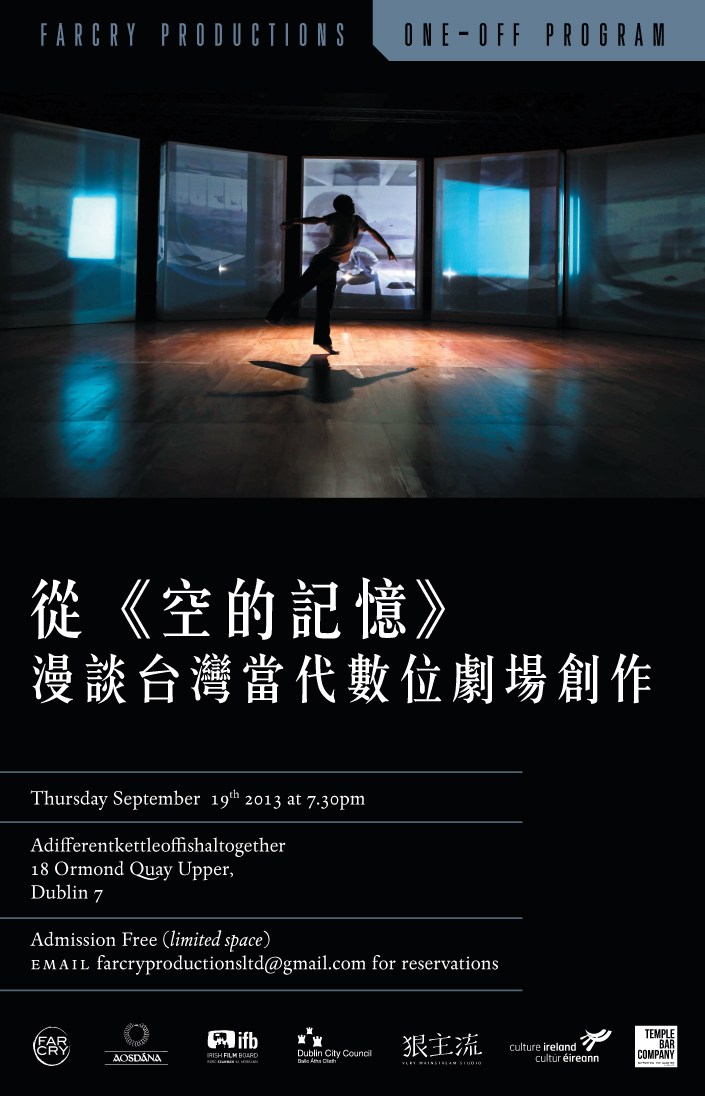
Farcry Productions – One Off Series

EMPTIED MEMORIES

A presentation on the workings of digital Theatre and contemporary dance practice from Taiwanese artist Chou, Tung-Yen

There will be a 20 minute film presentation of Emptied Memories Dance piece after which Chou, Tung-Yen will speak about the making of this work. Questions will be taken at the end of the presentation.

Thursday September 19th at 7.30pm

Adifferentkettleoffishaltogether, 18 Ormond Quay Upper, Dublin 7

Admission Free: Limited Space please book a seat through farcryproductionsltd@gmail.com

www.farcryproductions.ie

About Emptied Memories

Emptied Memories

Emptied Memories is the ongoing exploration into space and memory through theater and moving image that scenographer Chou, Tung-Yen has undertaken in recent years. In 2011-2012, under the sponsorship of Ministry of Culture, he invited the choreographer Chou, Shu-Yi to try to co-create an “empty space” by using “space” and “memory” as the core from which to start. The creation employs the technological integration of panoramic video, real-time image processing, sensors and wireless stage control system. The performer drives the external deformation of the material world, echoing the internal state, in order to present the organic flow of one’s mind landscape.

In October 2011, it was presented in its work-in-progress stage and one year later premiered in 2012 Digital Performing Arts Festival. Now the voyage of Emptied Memories continues.

“Precise images and body movements.
 An exploration into the deepest mind.”

──by Wang, Jun-Jieh (Chief Director of Center for Art and Technology, TNUA)

 “An exclusive experience of making stream of consciousness visible”

──by Ping, Heng (Former Artistic Director of National Theater & Concert Hall)

)

About – Chou, Tung-Yen

SONY DSC

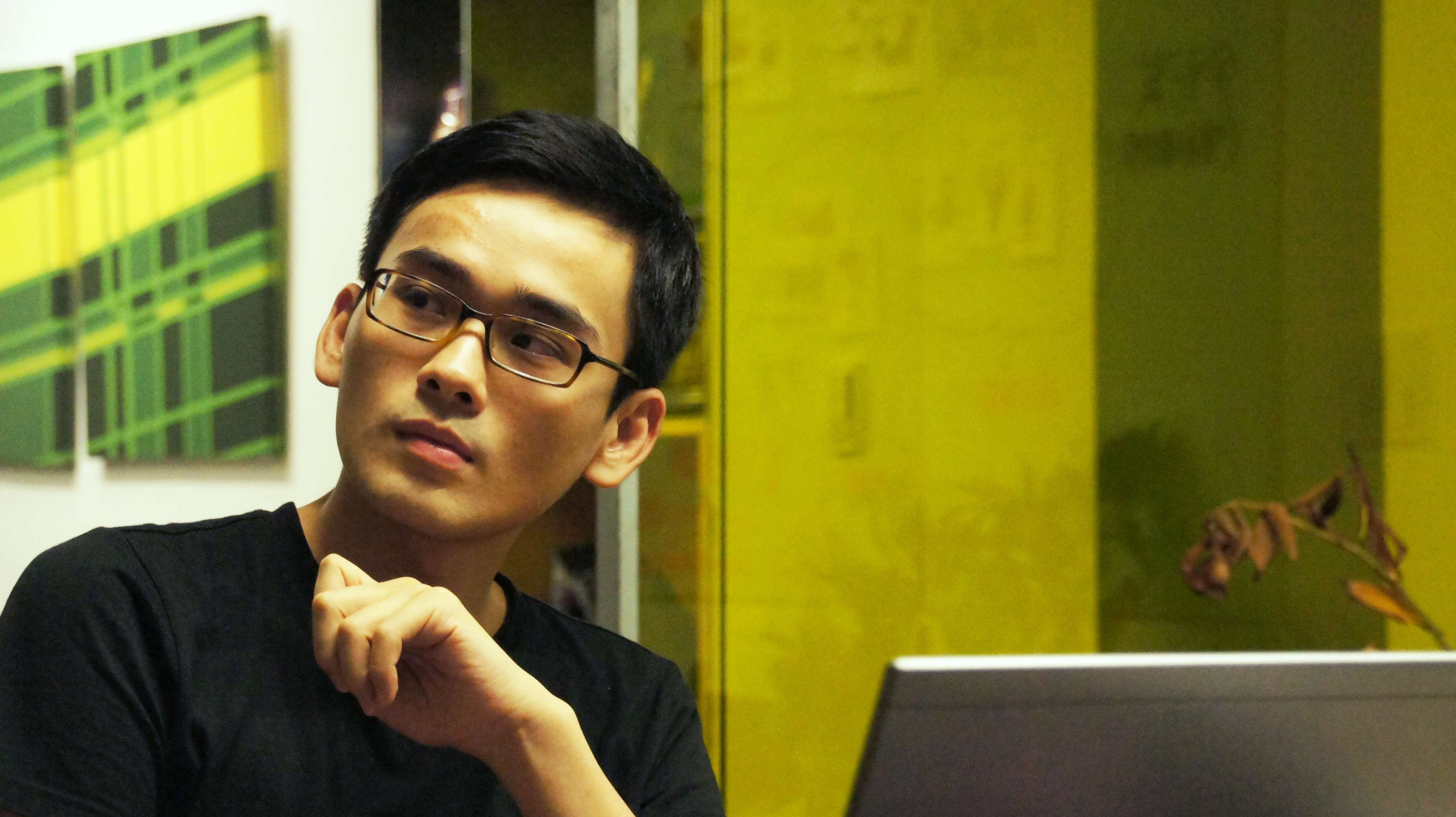
CHOU, Tung-Yen holds a MA in Scenography with distinction from Central Saint Martins College of Art and Design in London and a BFA in Theatre Directing from TNUA. Currently a lecturer teaching in the School of Theatre, Taipei National University of the Arts, he is also the director of Very Mainstream Studio. CHOU works mainly in film and theatre arts. His film and video works have been nominated and participated in various international film festivals. Recently he has collaborated closely as well as diversely with many of Taiwan’s performing arts groups (including Performance Workshop, Godot Theatre Company, Tainaner Ensemble, Flying Group Theatre, Shakespeare’s Wild Sisters Group, Taiwan Drama Performance, Dark Eyes Performance Lab, Scarecrow Contemporary Dance Company, Horse DanceTheatre, National Symphony Orchestra and Taipei Chinese Orchestra) In addition, CHOU has also done excellent work in interdisciplinary creative projects incorporating technology with performing arts.

EmptiedMemories-Evite-Chinese.inddEmptiedMemories-Evite.indd

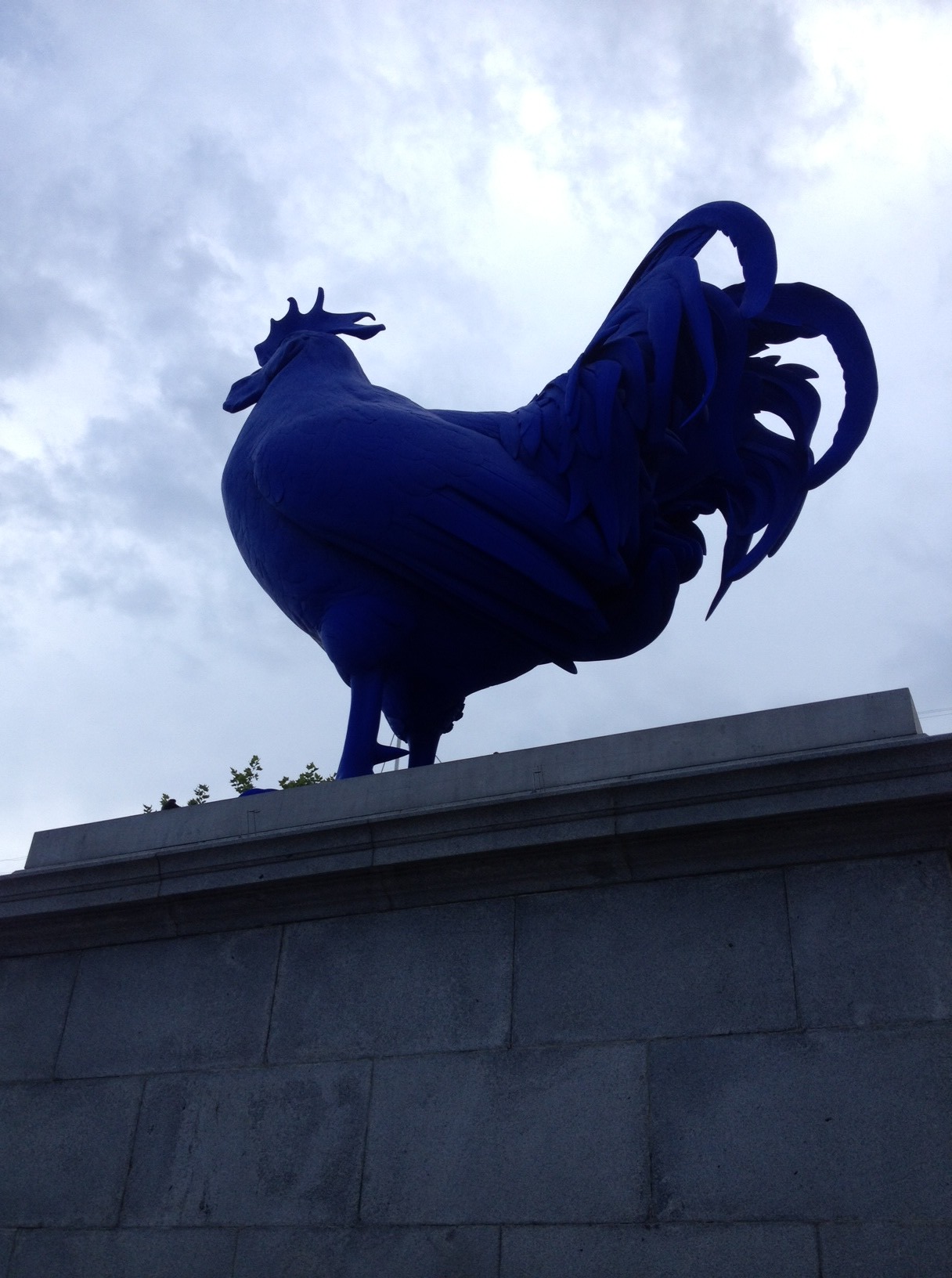
The book, the thief and the tall tales of Lilliput. A cock and bull story.

“We had presumed he would be happy to have it available. I should have written to him [but] I didn’t. (A. Farrell, Lilliput Press)

blue cock

Well I couldn’t ever presume because I was never informed it was online in the first place. So for over 18 months, Antony Farrell was presuming that I would be delighted. I don’t understand this because I had stopped my contract with Lilliput Press in 2004 and bought my entire stock back and informed them I wanted nothing whatsoever got to do with them. The reason? Something similar to the kind of contempt and disregard and theft thats at hand at present with Mr O Farrell willy nilly operating in the never never land. The land of his own imagination and his own arrogant presumption. I presume there are many other authors out there under Mr O Farrells presumption who would be very happy with their work going online. Well Mr Philip Casey who is one such author, like myself, is not one bit happy. As the saying goes how many more, how many more? In the words of John Philpot Curran ‘the price of liberty is eternal vigilance’ If I hadn’t stumbled upon an email from an American lady who had purchased my works from Kindle I would never have known. I doubt very much if Mr Farrell had any intention of informing me or asking me for permission as he knows only too well, I would have refused him and Lilliput press. If I want my work online, I’m quite capable of putting it out there myself. I’ll be writing to Mr O Farrell and you can be sure it won’t be a book, a poem or a play but I will publish it, myself, online. I think they call it literary correspondence. Let’s wait and see. This is about individual’s and organisations who wish to squash and exclude the artist. We must be always continuous in our efforts of the performance of our inclusion.

http://www.irishtimes.com/culture/books/lilliput-apologises-for-unauthorised-digital-sale-of-mannix-flynn-books-1.1503964

Voice of the Traveller magazine – press release

Please find attached a press release for Voice of the Traveller magazine outlining our plans to launch into general newsagents on Thursday June 20th .


I have also attached a map of the geographical areas our regional reporters cover. If you would like to get in contact with one of our regional reporters please contact us through 09064 98017.


Voice of the Traveller Magazine Launches into 1200 Newsagents Nationwide.


Since its first edition in 1991, Voice of the Traveller has become the only magazine in Ireland specifically dedicated to profiling Traveller life today.  It plays a key role in profiling Traveller culture, life and heritage, while remaining focused on current affairs and topical issues pertinent to the community.


A number of different media experts and designers have helped shape the magazine over recent years. As well as our regional reporters undergoing systematic training we now feel that Voice of the Traveller is at a standard to be displayed proudly on newsagent stands.


Written by Travellers for Travellers and the wider community, Voice of the Traveller serves as a window and guarantees its readers an authentic view of a community whose coverage in mainstream tabloids tends to be unrepresented and generally negative. Our regional reporters challenge the stereotypes and negative issues that have constantly arisen and only served to limit the potential growth of our community.

In recent editions of the magazine we have featured interviews from TV personality Vincent Browne, former Dragons’ Den panellist Sean Gallagher, Irish Olympic success John Joe Nevin and ex Westlife member Kian Egan. Issues covered over the past few editions include information on educational services, a look at life inside an Irish prison from a Traveller’s perspective and recent sensation, Kelly Mongan on her future ambitions. Voice of the Traveller also has a number of regular contributors from comedian Martin “Beanz” Ward who provides a light hearted look at the community and Youth Officer Michael Kelly whose column provides information on the importance of youth work in a child’s development. The latest contributor to become involved is Trinity graduate, playwright and activist Rosaleen McDonagh.


Over the recent number of years we have become more involved in mainstream media, taking part in shows such as the very successful Truth about Travellers which first aired in 2010 as well as Paddy and Sally’s excellent adventure 2012 and Hector Goes Traveller. More recently Voice of the Traveller was profiled in RTE’s Nationwide and was described by presenter Anne Cassin as “a magnificent publication but it’s much more than that, it’s an educator, providing a link between the settled and Traveller communities”.


Regional news and information on changes to the law as well as details of upcoming events keep our readers both in Ireland and abroad informed on what’s happening within the community. The magazine is hailed as a vital information tool to those separated from the community or living abroad.


For those that are interested in reading the other side of the story this is a must read.


Regards


Michael Power


Voice of the Traveller Magazine


Involve LTD

Monksland Business Park

Monksland

Athlone

Co. Roscommon


0906498017


Disarmed Art. Tadeusz Kantor – Actor’s Condition

The decline of the 19th century bourgeois morality, which granted, and not without obstacles, the privilege of citizenship, only to the greatest talents, enabled the actor to achieve a normal social status.

The revolution of the 1920’s turned him into a worker for the avant-garde culture.  It was the time when constructivism had the world fascinated with its doctrine of art, defined as a dynamic factor in the organization of life and society.

In many countries, the growth of industrial and technical civilisation was followed by the loss of art’s avant-garde quality and its dynamism, and turned theatre more and more into an institution, while actor, consequently, into its officer.

The once-obtained rights got deformed when clashed with the society of consumption that built its life and ideas on an extreme form of pragmatism, a cult of effectiveness and automatism, each of whose is contrary to the disturbing intervention of art.

The assimilation with such a society ended up in an artistic dullness, indifference and conformism.  The degradation was additionally propelled by the development of mass-media: radio, film and television.

The final stage meets attitudes that are always close to one another: moral conformism, a total loss of interest in the formal development and an artistic sclerosis.

Paradoxically, actor’s ‘laicization’ and democratization’ which historically emancipated him, drove him to mediocrity.

The assimilation and recuperation of the artist and his craft by the society of consumption may serve, in the case of actor, as an exemplification of the phenomenon.

Actor-artist has been disarmed and tamed, deprived of his resistance, so important both for himself and his role in the society which has brought them to being obedient to laws and rules imposed by the society of production and consumption, and to the loss of independence that , placing him outside a community, enabled him to influence it.

The reform in theatre and in actor’s craft must influence the profundity of the metier.  In the long period of actor’s social isolation, their attitude and condition were strongly marked by features which had been formed in a natural and spontaneous process by his heart and spirit, and which had separated him from the rest of the healthy-minded society and which had brought into being new autonomous forms of stage acting.

And here comes an image of this character: Actor the naked image of man, exposed to the public, the face elastic as a gum, actor- a fair artist, a shameless exhibitionist who stimulates his tears and laughter, and the functions of all human organs, passions of the heart and of the mind, excesses of the stomach and penis, with a body exposed to all sorts of excitement, danger and surprise, a homunculus, a dummy of man’s anatomy and mind, denying dignity and prestige, exposed to lashes and made into a laughing-stock, bred solely by his imagination which provokes a permanent insatiability with anything that exists in reality, outside a fictitious world and a state of eternal nostalgia, making him into this perennial wandering.  The wandering Artist, Eternal Wanderer, homeless, futile in his search for a haven, stuck to his luggage, in which rest all his hopes, illusions, with their wealth and their fiction, enviously and eternally protected by him from intolerance and indifference.

http://www.cricoteka.pl/en/main.php?d=plastyka